Transform your sink space from £75
If your kitchen tap springs a leak or stops working altogether, it can cause serious disruption to your home life. Whether you’ve got a mixer tap or two single taps, you’ll want to get a replacement fitted as soon as possible. But how much does it cost? We’ll go through everything you need to know in this guide.
How much does a plumber charge to replace a kitchen tap?
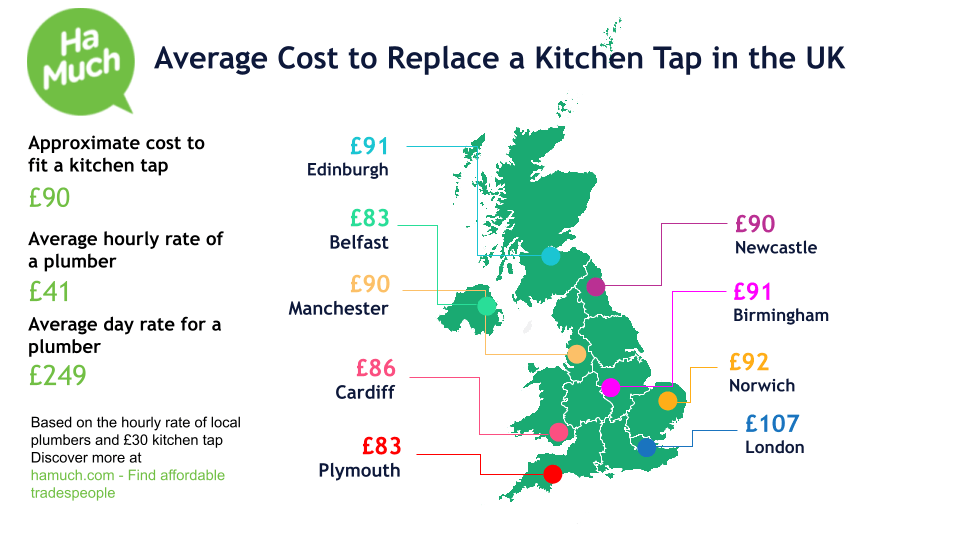
How much a plumber will charge to replace a kitchen tap depends on the complexity of the job and where you live. Expect to pay at least £80 for them to change your tap, plus the cost of the new tap:
|
Service |
Average cost |
|
Replacing a kitchen mixer tap with a new mixer tap |
£80 |
|
Replacing kitchen pillar taps with a new mixer tap |
£150 |
|
Replacing new seals on a kitchen mixer tap |
£35 |
|
Diagnosing a leak on a kitchen mixer tap and repairing the leak |
£50 |
|
Fitting isolation valves on a kitchen mixer tap |
£60 |
Where you live has a big impact on the final cost of kitchen tap replacement. Plumber rates are usually highest in London and the south east, and lowest in the north of England and Scotland.
Take a look at our kitchen tap replacement cost table and find your nearest town or city to get a more accurate estimate for plumber rates in your area.
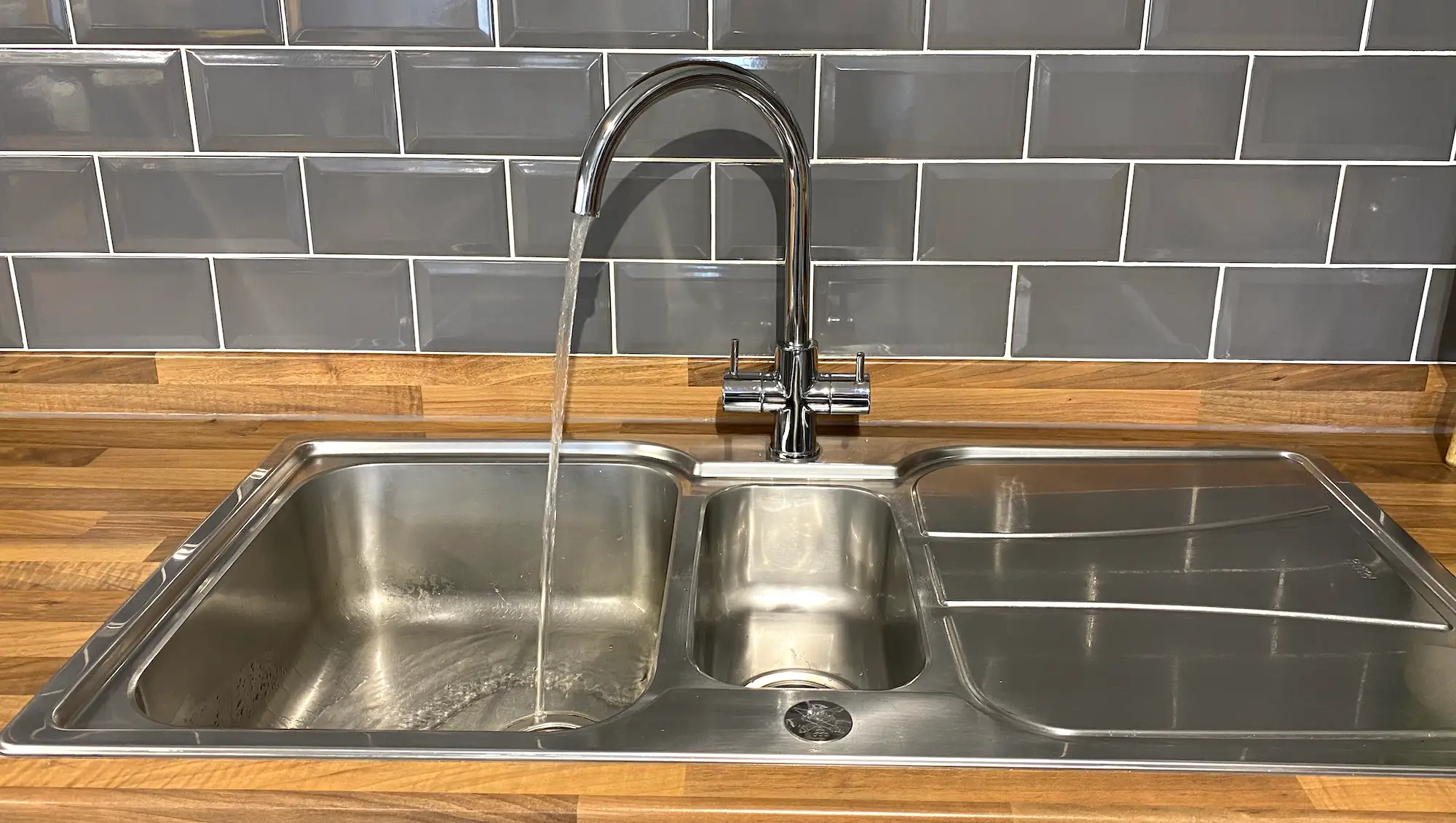
Kitchen mixer tap brands
Mixer taps are probably the most common type of kitchen tap today. With one spout for both the hot and cold water, it makes it easy to adjust the temperature for hand washing or washing up.
When you turn the tap on, small holes, known as valves or butterflies, move from a closed to an open position or from partially open to fully open, depending on the desired temperature and flow rate.
Most mixer taps are fitted with a flow limiter to stop too much hot and cold water from flowing through the mixer at once. This results in less hot water being used than if you had two single taps, which should reduce your heating bill.
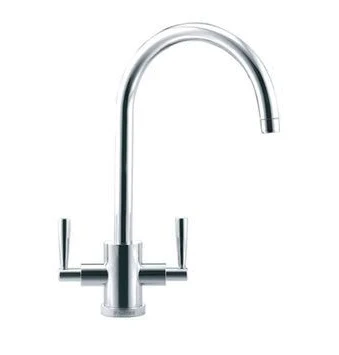
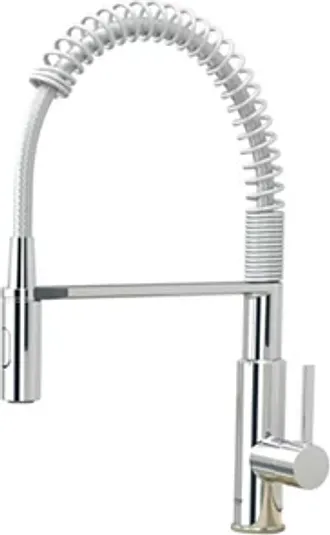
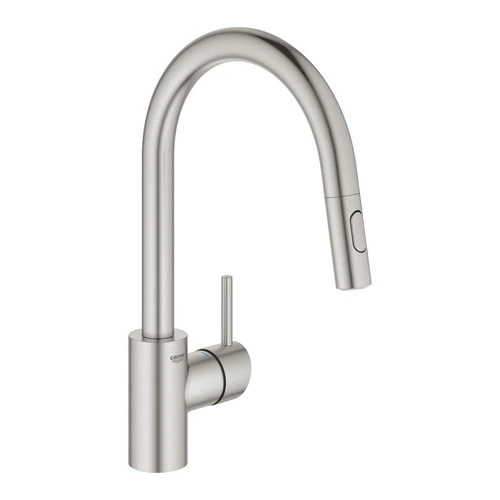
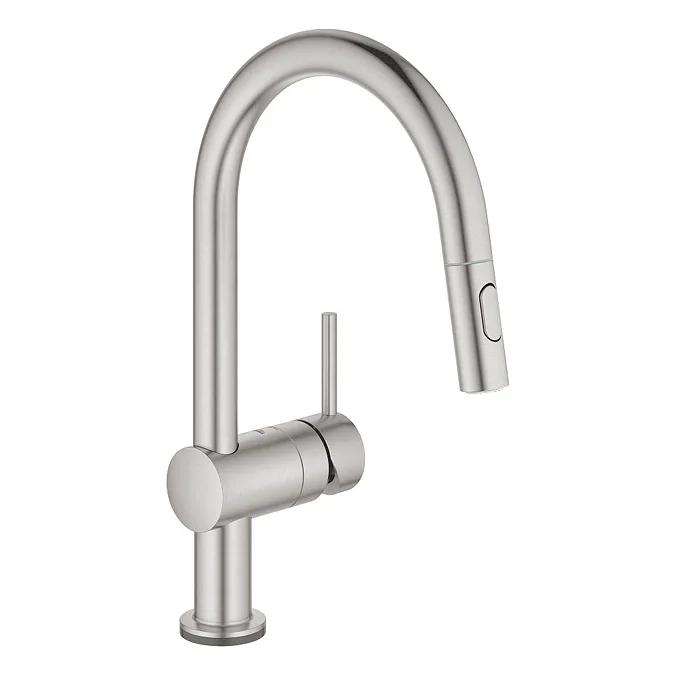
Kitchen mixer taps vary hugely in price. To help you understand the total cost of kitchen tap replacement, we’ve put together a table of some of the top brands’ mixer taps and how much they cost:

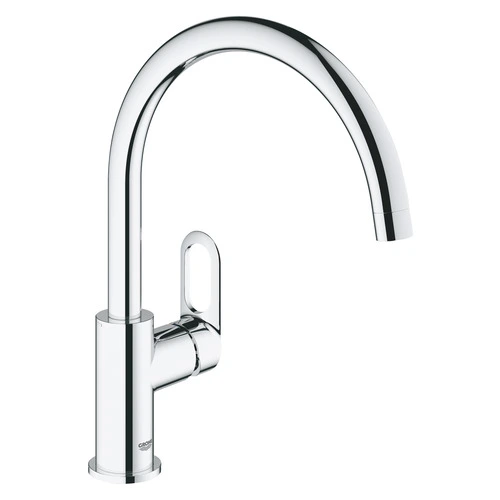
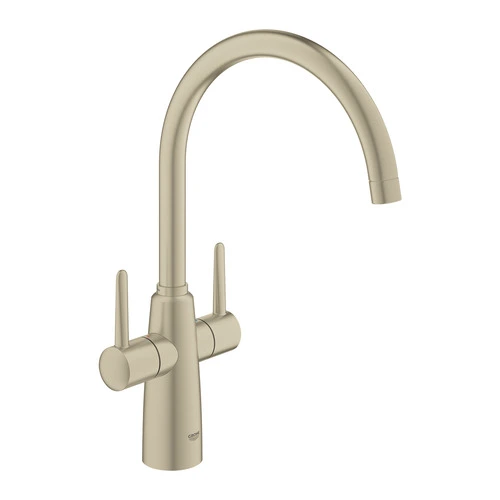
Types of kitchen mixer taps
When you’re shopping for your new mixer tap, consider the space in the kitchen and if you’d like your tap to be mounted on the countertop or the wall. Having it mounted to the wall may cost more if your plumber needs to add more pipework.
Next, decide what other features you’d like. Most mixer taps can be turned side to side to give you more flexibility, while others may have an extendable spout to help spray dishes when washing up. Mixer taps come in different finishes and colours, from chrome satin to matt black, and everything in between.
There are a few different types of kitchen mixer taps:
- Single lever mixer: One lever to control the water temperature
- Monobloc mixer: The most common kitchen tap mixer, this has one hole for installation and may have one or two levers on the same body
- Bridge mixer: Separate hot and cold water inlets that are connected by a central bridge, where the hot and cold water mix before leaving a single spout
- Wall-mounted mixer: These keep the taps off the sink or worktop and can make the area feel uncluttered, as much of the pipework can be hidden behind tiles
Can I change my separate kitchen taps to a mixer tap?
Many homes still have separate hot and cold water taps in the kitchen. This was to avoid cross-contamination when hot water was not fit to mix with drinking water.
If you still have separate pillar taps in your kitchen, a plumber can certainly change them to a mixer tap for you. However, a bit more work will be involved, and therefore the cost is usually higher.
When the plumber installs the mixer tap, there will still be two separate pipes for hot and cold water that connect at the back of the mixer tap. This connection can be made with isolation valves so that if there is ever a plumbing emergency, one of the water supplies can be isolated from the tap. If the water supply is connected without isolation valves, there will just be the hoses bringing the water fitted with O-rings.
Can a kitchen mixer tap be repaired?
There are many situations where your plumber will be able to repair your faulty mixer tap without you having to replace it. A common fault with mixer taps is a leaky tap that won’t shut off correctly. A leak usually appears in one of three different areas:
- at the base of the spout
- dripping from the mouth of the spout
- at the water supply connection
If the leak is coming from the base of the spout, a plumber could do a simple repair by removing the spout and replacing the seal ring. The seal O-ring deteriorates over time, and this can cause a trickle of water to escape, getting worse the longer it is left. Often, if there is a leak at the water supply connection, this is also due to the seals or the connection has loosened over time and may just need to be re-tightened.
It’s a good idea to have isolation valves fitted at the water connections, as the flow can be reduced in areas where the pressure is too high to avoid running the mixer under a high flow rate. Having isolation valves means you can also turn off the water supply one at a time, to see if this helps stop the leak to diagnose where the cause of the water leak is coming from.
When a tap is dripping from the mouth of the spout, this could be due to limescale or a washer seal inside that has perished. First, clean off any limescale and replace the O-ring, and then if your tap is still leaking, the built-in cartridge may need to be removed and cleaned or replaced.
A professional plumber will be able to take the mixer tap apart and have a look at all of the seals, replacing any that are showing signs of age.
Can I replace a kitchen tap myself?
If you’re confident with DIY, you may be able to replace your kitchen tap yourself. If you’re doing a like-for-like swap, installation can be relatively straightforward, with the most difficult part being accessing the plumbing to remove and replace the tap.
However, there’s always a chance that things can go wrong when you do it yourself, so we’d always recommend leaving plumbing work to the professionals.
Post your job with HaMuch now and we’ll put you in touch with local plumbers who will be happy to help you replace your kitchen tap.