Improve your water quality from £1,242
- How much will it cost to supply and fit a water softener?
- Factors affecting the cost of water softener installation
- What plumbing is involved with installing a water softener?
- Advantages and disadvantages of water softeners
- How to choose a water softener
- How long does it take to fit a water softener?
- How long should a water softener last?
- How often do I need to service my water softener?
- Does a water softener use a lot of electricity?
- Can I fit a water softener myself?
- Is it worth getting a water softener?
- Fit a water softener cost in the UK
Around 60% of the UK is considered to have hard to very hard water, with the south and east of England having the hardest water. Hard water has a high concentration of calcium, magnesium, and other minerals because it flows through rocks like limestone and chalk. If you see signs of limescale around your shower, baths and taps, the chances are you live in a hard water area.
Hard water can damage parts of your heating and plumbing systems, as well as appliances like washing machines and kettles. It can also dull your clothes when they’re washed and leave marks on glassware after it’s been put through the dishwasher.
The solution to these problems caused by hard water is to install a water softener, which removes these minerals from your water. Not only will this prevent damage to your pipework and appliances, but it’ll brighten your laundry and leave your hair and skin feeling softer. Find out how much water softener installation costs and what you need to consider before you buy one.
How much will it cost to supply and fit a water softener?
The full cost of installing a water softener largely depends on the brand of water softener you choose, as they can vary hugely in price. For an average mid-range water softener, expect to spend £1,100 on supply and installation.
|
Service/product |
Average cost |
|
Fit a water softener underneath kitchen sink or in a garage (installation only) |
£350 |
|
Supply and fit a budget water softener |
£750 |
|
Budget water softener (e.g. Water2Buy) |
£350 |
|
Mid-range water softener (e.g. BWT) |
£750 |
|
Premium water softener (e.g. Kinetico) |
£1,745 |
|
Fit a Combimate limescale prevention device underneath the kitchen sink (supply and fit) |
£280 |
|
Fit an electronic scale inhibitor underneath the kitchen sink (supply and fit) |
£115 |
|
Salt costs |
£15 per month |
|
Annual service |
£100 |
Factors affecting the cost of water softener installation
There are a few factors that affect how much a water softener and its installation will cost:
- Type of water softener: There are lots of different types of water softener, including non-electric ones that are powered by incoming water pressure, electric, metered and time-clock systems. They all vary in price, with electric ones usually being the cheapest.
- Size and capacity: One of the biggest factors affecting the cost of a water softener is its size. The more water you use at home, the bigger the water softener will need to be. Small budget systems can cost as little as £350 while large double-cylinder models can reach £1,800.
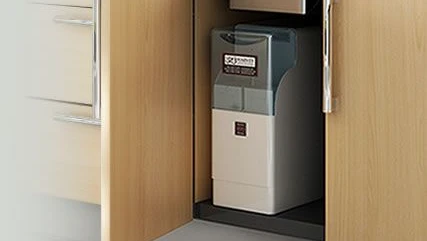
- Location to be installed: Usually, having your water softener installed underneath your kitchen sink is the easiest and cheapest option as there will be existing pipework and there’s usually a power outlet close by. If you want to install it somewhere else where you don’t have the pipework or drainage, the plumber will charge more.
- Where you live: If you live in a city or large town, expect installation costs to be higher. London and the south east of England tend to have the highest plumber rates.
At HaMuch, we use our database of our plumbers’ hourly and daily rates to estimate how much plumbing jobs cost near your home. Take a look at our water softener installation cost table and find your nearest town or city to get a more accurate idea of how much it costs in your area.
What plumbing is involved with installing a water softener?
A water softener should be fitted onto the mains water supply coming into your home. It is normally housed in the cupboard underneath the kitchen sink, or it can be installed out of sight in the garage or utility room. It shouldn’t be installed anywhere where it may freeze.
To install the water softener, the plumber will need to turn off the mains water so that they can cut into the water supply. The plumber should install shutoff valves to isolate the water to the softener if ever that is needed.
Make sure that the plumber installing the water softener follows the manufacturer’s instructions on the brand that you purchase. Electric water softeners require an electrical socket as well as a drain, so a kitchen sink is an ideal place, with the drain hose being connected from the softener to the drain or utility sink.
There shouldn’t be too much disruption to your home during a water softener installation, especially if the unit is being fitted under your kitchen sink. Just remember that the water will be shut off for a few hours, so you may want to make sure you have the kettle filled for cups of tea and some bottles of water in the fridge.
Advantages and disadvantages of water softeners
Like any product, there are advantages and disadvantages of installing a water softener. Weigh up the pros and cons before you decide to invest in one:
Advantages:
- Prevents limescale buildup: Extends the lifespan of appliances like kettles, dishwashers and washing machines
- Improves water heating efficiency: Soft water allows boilers and water heaters to work more effectively, reducing energy costs
- Better for skin and hair: Softened water can help with dry skin and hair issues caused by hard water
- Reduces detergent and soap usage: Soft water lathers more easily, requiring less soap, shampoo and detergent
- Better laundry and washing up results: Clothes washed in softened water look brighter and feel softer, while glassware is more shiny
- Protects plumbing – Prevents scale buildup in pipes, reducing blockages and maintenance costs
Disadvantages:
- Increased sodium levels:The ion-exchange process adds sodium to the water, which may not be suitable for people on low-sodium diets
- Ongoing maintenance: Requires regular refilling with salt and occasional servicing.
- Increases water bill: Water softeners can waste a small amount of water during the softening process, so you may notice an increase in your bill
- Cost: Initial installation and maintenance can be expensive
- Not ideal for drinking: Many people report that softened water doesn’t taste pleasant, and the softened water can also leach heavy metals from pipes into the water. It’s recommended to have a separate drinking water tap
How to choose a water softener
There are a few things you need to bear in mind when choosing a water softener to make sure you get the right one for your home:
- Water hardness level: Test your water to determine its hardness and choose a system that can handle it effectively.
- Household size: Larger households need a softener with a higher capacity to ensure an adequate water supply.
- Type of water softener: There are a few different types of water softener to be aware of:
- Salt-based ion exchange: Most common and effective, but requires regular salt replenishment
- Salt-free: Conditions water rather than softening it, reducing limescale without adding sodium
- Dual-cylinder: Ideal for large households or areas with high water usage
- Magnetic or electronic descalers: Alternative solutions that prevent limescale buildup but don’t remove hardness minerals
- Regeneration method: Choose between timer-based (regenerates on specific days/times), metered (regenerates after a certain volume of water has been used), or on-demand systems for efficiency.
- Space and installation requirements: Consider the size of the unit and where it will be installed.
- Maintenance and cost: Factor in ongoing costs for salt, filters and servicing.
If you’re unsure about the best water softener for you, speak to a plumber who will be able to advise you.
How long does it take to fit a water softener?
The installation time for a water softener depends on the complexity of the plumbing and the location of the unit. A professional plumber can usually install a water softener within 2 to 4 hours. If you need modifications to your plumbing system, like extra pipework, installation might take longer.
How long should a water softener last?
How long a water softener lasts varies based on quality, maintenance and usage. On average, expect a standard water softener to last between 10 and 15 years. Premium models may last up to 20 years.
To maximise the lifespan of your softener, you should have it serviced regularly, change the filters and keep it topped up with the correct type of salt.
How often do I need to service my water softener?
Just like a boiler, most water softeners should be serviced annually by your plumber. The service will involve cleaning out the brine tank and recharging resins. They will check the valve settings to ensure that the softener is running at a pace ideal for your home setup.
Any washers or O-rings that have deteriorated can be replaced during the service, and the plumber will check the components of the water softener to avoid any expensive repairs or leaks.
Once the water softener is installed, the ongoing cost will be the cost of water softener salt needing to be topped up and a yearly service of the water softener. The average salt costs are £15 per month, while a service may cost up to £100 per year.
Does a water softener use a lot of electricity?
Most modern electric water softeners are designed to be energy-efficient. On average, a standard water softener only uses about 20 to 40 kWh per year, which is roughly the same energy consumption as an alarm clock. This is equivalent to about £5-10 per year.
The electricity usage depends on the type of system, how frequently it regenerates and its overall efficiency. Some high-efficiency models use even less electricity by operating on demand rather than on a set schedule.
Can I fit a water softener myself?
You can install a water softener yourself if you have basic plumbing knowledge. However, we would always recommend professional installation for the following reasons:
- Ensures compliance with local plumbing regulations
- Reduces the risk of leaks and damage to the water system
- Some manufacturers require professional installation for warranty validity
If you choose to install it yourself, you will need tools such as pipe wrenches, tubing cutters and connectors. Make sure to follow the manufacturer’s instructions carefully.
Is it worth getting a water softener?
A water softener is a great choice for extending the life of your pipework and appliances, as well as improve the way your clothes, skin and hair will feel. However, it’s a significant investment, so do your research to make sure you choose a brand you can trust. Discuss with your plumber before you buy the water softener so that they can advise you on what would best suit the layout and size of your home.
Ready to get quotes to have a water softener installed? Post your job on HaMuch now to get in touch with plumbers in your local area.