If you have noticed that your radiators take a long time to heat up, or are riddled with cold spots then it might be time for your central heating system to be powerflushed.
Common symptoms of needing a powerflush include;
- Noisey banging boiler called “kettling”
- Boiler cutting out due to slow circulation
- Cold spots at the bottom of a radiator clogged up from sludge
- Cold spots at the top of a radiator from air
- Radiators very slow to heat or stone cold from blocked circulation
- Hot water in taps from a combi boiler fluctuating from hot to cold
What is powerflushing?
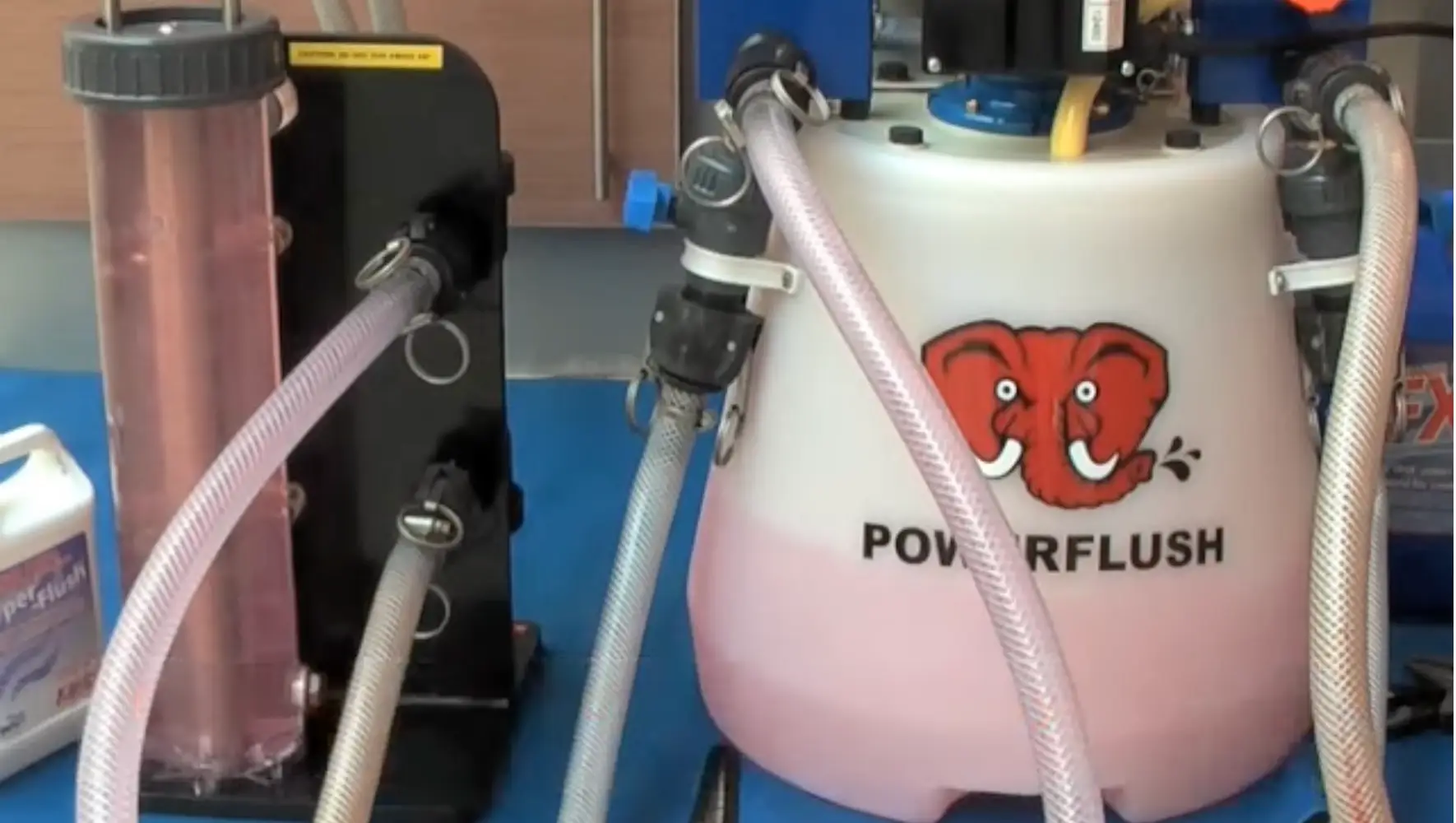
Powerflushing is the use of chemicals and high flow rate to break down the build-up of rust debris, also known as black sludge, and penetrate through stubborn blockages in the central heating system. Powerflushing involves using a powerflush machine. This machine has a high flow rate and is able to reverse the flow of the system, to push the water in both directions to really force out stubborn debris.
This vigorous flow coupled with the chemicals can remove the iron oxide sludge debris out of the pipework and radiators. The powerflush engineer will also create a back and forth motion of water with his machine to agitate the inside of the pipework to help loosen any build-up of sludge (they may also agitate the outside of the radiators depending on the fragility of the system). Where some people think that fitting a magnet filter near the boiler to catch debris is enough, this will only catch loose debris travelling around the system with the flow of water but will not remove any build-up of sludge trapped in radiators or pipework, only the power flush will do that.
Why do British Gas say I need a power flush?
If you have a homecare agreement with British Gas and they maintain your boiler, before British Gas replaces any parts on the central heating system, they want the new part being plumbed into a clean sludge-free system to avoid the new part being destroyed by debris. This is why British Gas usually insists on a powerflush before they replace parts. The good news is even when on a British Gas service contract, check with them but you are usually completely in your rights to shop around for the best quote and get the powerflush completed by someone else, as long as you have an invoice or some form of documentation to prove that you have paid for a powerflush on your central heating system.
System flush vs power flush vs chemical flush
Sometimes it can get tricky understanding what it is that your system requires to get it back to optimal working performance. Especially when tradespeople might use different jargon to advise on the same course of action.
If a heating engineer has told you to get a system flush and you got a second opinion from another heating engineer mentioning a power flush… yes, they are both referring to the same chemical clean.
A power flush, also referred to as a system flush or a system power flush, just means cleaning out the entire central heating circuit with the use of the powerflush machine and chemicals. Do not bother with doing a partial flush, paying someone to come in and not flush out all of the radiators because once the circuit is back on in winter, the sludge debris that was sitting in a different part of pipework will just contaminate the cleaned out radiators.
When told you need a chemical flush, best to get clarity from the gas engineer, are they referring to a powerflush, or are they meaning using chemicals to dose the system, travel around by turning the heating on, and then draining down the system. This can work if the system is not badly blocked. If you are already paying out a lot of money, then best to just do a more intense version with better results and powerflush. There is no draining down for a powerflush, but rather keeping the system pressurised and pushing out the dirty water while constantly topping up with clean water, this way is to prevent any further blockages in elbows of pipework that draining down can cause.
How much will it cost to powerflush?
The total cost of the powerflush can be from a man-in-van offering to do it for just a few hours labour and the cost of hiring a powerflushing machine (from £300) to paying a specialised company, who own the equipment and more familiar with different scenarios they may come across on different heating systems (from £400). Most often, a powerflush is completed in a day. Smaller systems require just half of the day. Time taken to powerflush will depend on how often the engineer carries out a powerflush, as someone hiring the equipment and not too familiar or confident with its operating, may take longer than someone who does this daily.
Other factors affecting the cost are;
- how many floors are involved in your property as some companies will charge per floor
- how many radiators / towel rails / loops of underfloor heating are in the home
- what size pump you might have (large homes might run on a commercial sized pump)
- If the system requires a first visit of a pre-treatment of the cleaning chemicals before the day of power flushing
|
How much labour costs to power flush |
Per |
Average total labour cost |
|
Powerflush 7 radiators |
Per day |
£400 |
|
Powerflush 12 radiators |
Per day |
£560 |
|
Pre-treat a blocked system and then powerflush 10 radiators |
Per day |
£620 |
|
Powerflush 12 radiators and change a circulatory pump |
Per day |
£660 |
Is my system too old to powerflush?
A big concern is whether a system is too old to handle a powerflush or if the powerflush will result in leaks, with high pressure bursting through old pipework. As long as your central heating system has water running through the boiler, and a circuit of pipework, it is suitable to be powerflushed.
Powerflush cleaner chemicals are mostly non-acidic therefore are safe and do not cause any damage to copper or plastic pipes (there is an acid option for a more vigorous clean and heating engineers will then neutralise the system with neutralising crystals afterwards but if your system is fragile they will not use this option).
A boiler, for safety reasons, is designed to handle water pressure of up to 4.5 bar. The maximum pressure of a power flushing pump will never exceed much more than 2 bar of pressure, therefore it is not putting the central heating system under any unnecessary stress. Worst case, is removing the sludge, the sludge might be eating its way through radiators and the debris acting as a cork, so once the debris has been removed, this may expose existing pin-holes in radiators. These would eventually become apparent, with or without a powerflush, as eventually the rust eating through would be too big a hole to ‘self-seal’.
How often should I get a powerflush?
It is suggested that a powerflush is carried out on a system every 5 - 6 years. This will prolong the life of the boiler. During this time span, it means that any build up of sludge that starts after an initial powerflush will be flushed out again to avoid solid blockages forming over the years.
A powerflush is also needed when a new boiler is being installed. A new boiler’s components, like a heat exchanger, diverter valve, pump… will be protected by not having sludge debris running through the boiler. If a brand new boiler is installed into a dirty system, within two years you might need to replace a burnt-out pump or damaged heat exchanger, ruined from sludge.
Systems that are prone to debris, perhaps badly plumbed in pipework that draws in air, microbore systems where the pipework is so thin that it only takes a tiny bit of debris to block the system or single pipe systems where there is no real control of where to send the chemical water during the powerflush but more on only where the system will allow the flow, these types of systems may need a powerflush more frequently than standard systems to maintain the boilers and keep heat reaching radiators. Microbore systems can be effectively powerflushed but might just need a bit more attention and time of the day from the heating engineer carrying out the flush. For best results with microbore, single pipe or badly blocked systems is to actually put the chemical cleaner in a few weeks before the intended powerflush to really give the chemicals a chance to circulate and start breaking down debris blockages.
However often your system is powerflushed, it is good practice to yearly top the system up with a corrosion inhibitor. This will not prevent corrosion but will slow down the pace of it re-building.